

Backrooms
An eerily empty exercise in tone.

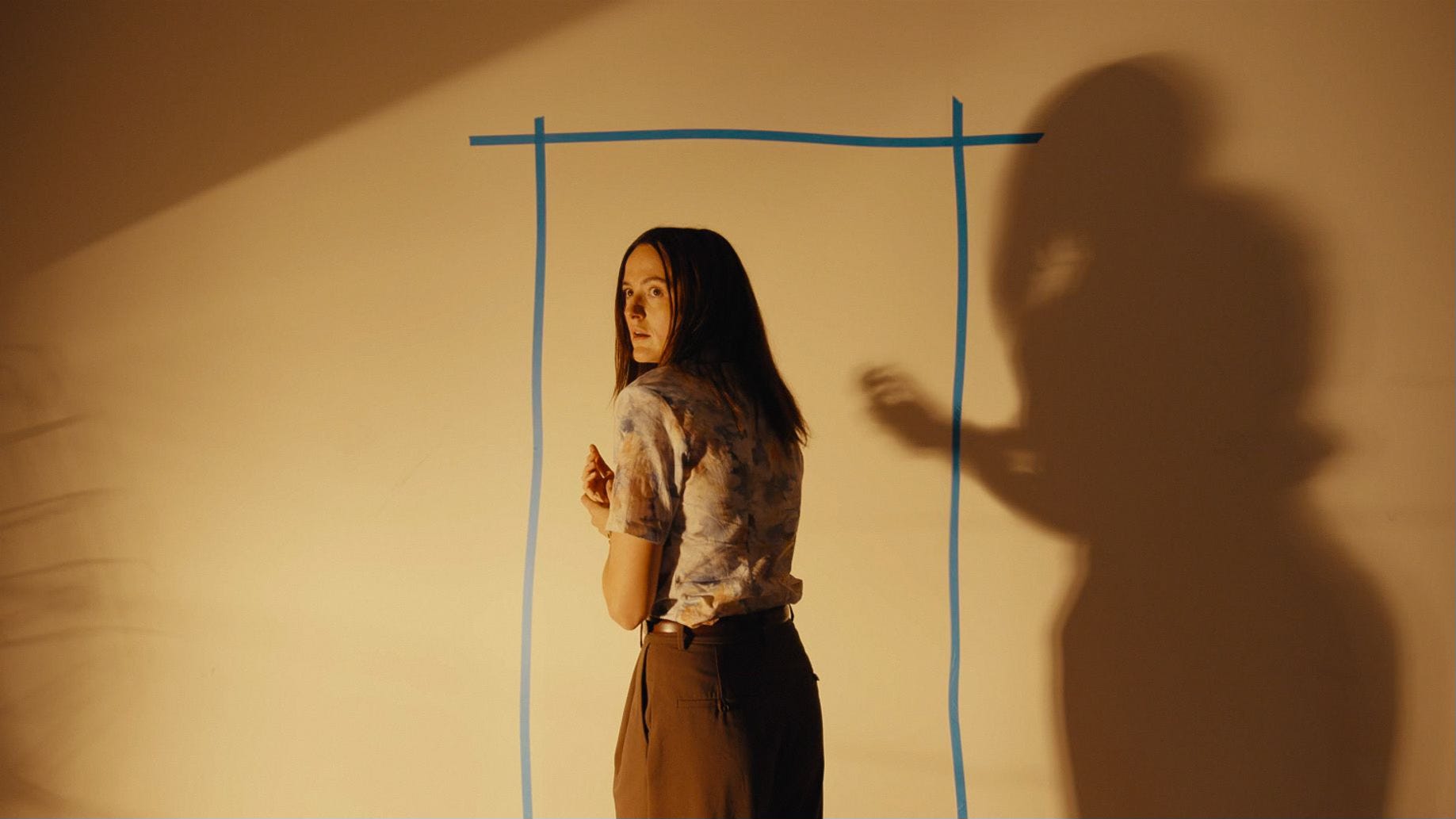
Franz Kafka wrote that books must be “an axe for the frozen sea inside us,” that fiction is meant to express what we’d rather not acknowledge, what frightens and devastates us. Kane Parsons’s debut feature, Backrooms—based on his series of YouTube shorts by the same name—is less a sharp axe than it is a blunt instrument. It won’t crack open the interior frozen sea, but it’s a decent tool if you want to press on a psychic bruise.
Clark (Chiwetel Ejiofor) has a problem. He’s alone in the world (although he argues that he isn’t lonely). He is trained as an architect but is stuck selling furniture no one wants in a cavernous showroom. His electricity bill is too high. His therapist, Doctor Mary (Renate Reinsve), says he’s stuck on a circular path, and she’s started to think that she can’t help him break the cycle. Clark is spinning his wheels in the morass of a rage he doesn’t want to get clear of. Then he finds the backrooms hidden in his furniture store’s basement.
The backrooms are an uncanny series of rooms and corridors that stretch on forever. They’re mostly empty, except for the occasional pile of chairs, a backward stop sign, a banner—things that seem like they shouldn’t be there. Fluorescent lights flicker in the drop ceiling overhead. The carpet is aged, and the walls are covered in yellow wallpaper with just enough of a design on it to draw attention to how much wallpaper there is and how far the walls go. The walls are interrupted only by occasional doors and by vestiges of other walls sticking out at odd angles like architectural non sequiturs. The deeper Clark goes into the backrooms, the weirder the space gets. Something stalks the darker corridors.
This concept was first developed on internet message boards, the product of iterations of creepypasta stories. The idea first came from a picture of an empty, abandoned store and from flaws in video game design: angle the in-game camera just right, and you can see “past” the layers of visual assets that make up the virtual world, revealing only empty space underneath. In Parsons’s YouTube series, each installment is brief enough that it can get by on tone and the faintest suggestion of a plot. There are no characters or themes, just the uncanny mood of recorded footage for something that shouldn’t really exist. The feature-length version of the story attempts to inject the kind of meaning demanded by traditional cinematic structure, which creepypasta typically rejects. The point of creepypasta isn’t to unearth some profound truth but to frighten the audience by giving them a sense of being unmoored from reality.
For better and worse, Backrooms is best when it abandons narrative and focuses on tone. Production designer Danny Vermette nails the fuzzy texture of half-remembered furnishings from the early 1990s: the floral prints that looked dated even at the time, the slightly off-kilter angles of prop furniture that telegraph a feeling of wrongness. That atmosphere builds well in sequences that follow Clark’s explorations of the backrooms, but the sense of unease fades whenever the film attempts to explain itself.
By the third trip into the backrooms, any sense of fear has dissipated, leaving only the desire to get on with the story. But the story is on rails. Clark and Mary are trapped in a world that has another one hidden behind it, and that world of the backrooms is eerily empty, populated only by the broken psyches of the people who enter it. As a concept and a setting, it’s compelling. Sift through it long enough, and you’ll find seeds of the hopelessness that arises from being trapped in a world you can’t control, let alone explain. The premise is upsetting, but there’s not much story underneath—just a series of empty rooms populated only by whatever demons you bring with you. —Sarah Welch-Larson
★★☆☆
Backrooms is haunting theaters everywhere now.
Greetings! Kindly consider allowing me to share my Backrooms reflection here. I just saw the new movie Backrooms by Kane Parsons. Going into it, I expected to witness a visually disorienting, overly abstract pop-culture phenomenon. Instead, I encountered an engaging storyline that serves as thoughtful social commentary on the nature of the mind, people’s struggles to overcome self-limiting habits, and humanity's awakening consciousness. Check out the video in this blog post to hear how the plot of this movie, as I understand it, relates to Vaishnava teachings from ancient India on the nature of consciousness.
https://awakeningself.substack.com/p/a-bhakti-yoga-commentary-of-backrooms