

Caught Stealing | Lynden
Austin Butler’s on the run, plus we recommend a documentary.

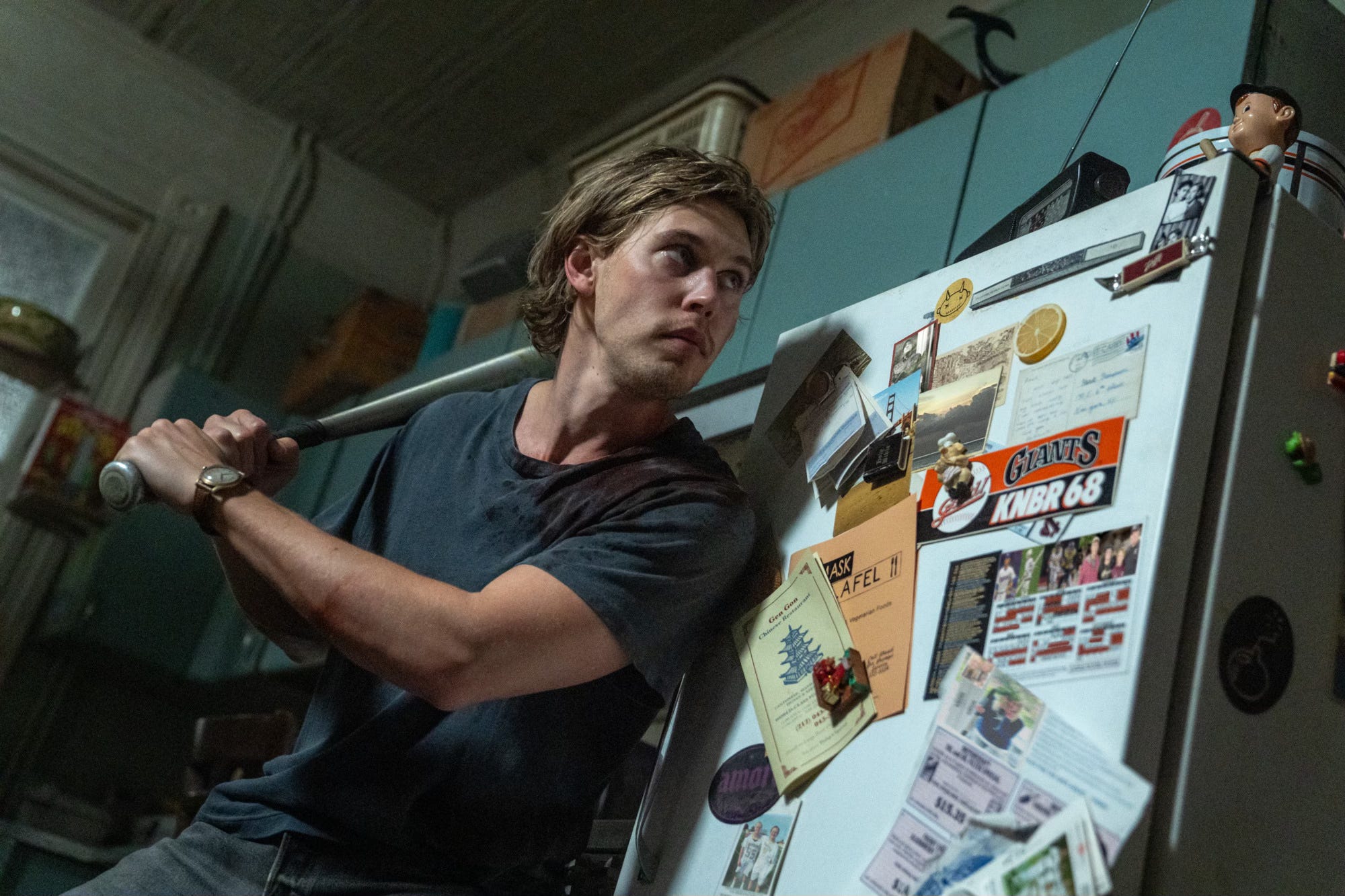
Hank (Austin Butler) has a nice, small life: he tends bar at the local dive, he’s seeing a paramedic named Yvonne (Zoë Kravitz), and he talks to his mom (Laura Dern) on the phone every day. (The two are fanatical fans of San Francisco’s baseball team; every phone call and voicemail ends with, “I love you. Go Giants.”) The East Village in 1998 isn’t a bad place to be … at least until Hank reluctantly agrees to watch his neighbor’s cat for a few days. Ever since then, his quiet life has been turned upside down; the whole world has been out to get him. Turns out that the neighbor, a British punk named Russ (Matt Smith), pissed off the wrong crowd—and now Hank has a slew of criminals after him, too.
Caught Stealing is almost a hangout movie, at least whenever Hank isn’t running from the next bad guy. Director Darren Aronofsky is willing to sit in the moment and let his characters riff; he’s also willing to play with time and Hank’s perception of it. The earliest hint that Hank has a drinking problem is a brief scene in which he cracks a beer in the morning before talking to Yvonne. The two discuss their plans for the day, she walks out the door, and he raises the bottle to take a drink, only to realize that it’s already empty. We never see him drink from it, and the empty bottle is the first sign that any time has passed at all.
It’s a showy touch; the movie is peppered with them, some less subtle. Later, after a bender, the movie smash-cuts to Hank projectile vomiting directly toward the camera. It’s gross, but unevenly so. the offputting pieces are front and center while the edges remain too clean, the picture too smooth. There’s no real grime. This could be a reference to Guiliani’s push to gentrify the city at the time (Russ even has an anti-Giuliani sticker on his door), but the effect is inconsistent, as though the disgusting and painful elements are there to lend the movie a personality it can’t quite manifest on its own.
It’s a shame, because the cast is stacked: Bad Bunny, Liev Schreiber, Griffin Dunne, Regina King, Vincent D’Onofrio, Carol Kane, and others all make appearances. The players are game, but they’re mostly one-note; the script especially doesn’t know what to do with Kravitz as Yvonne. The only character for whom we get a sense of depth is Hank. Butler does a fine job playing a former baseball player being put through his literal and metaphorical paces.
Which is fine; it’s his story anyway. Caught Stealing is kind of about giving up drinking, kind of about taking responsibility for past actions, and kind of about learning to become a cat person. The first and the third lessons are the ones that really stick for Hank, though the movie would have you believe that Hank has everything figured out even as he tries to flee the city. The script (adapted by Charlie Huston from his own book) has a late-1990s sense of ironic detachment that fits Aronofsky’s storytelling sensibilities. It all comes full circle in a way that ties things off neatly, but the literary irony at the heart of the movie is too cute by half, too self-absorbed. It’s a tale overheard at a dive bar: entertaining in the moment, but you wouldn’t want to live in it.—Sarah Welch-Larson
★★☆☆
Caught Stealing is in theaters now.
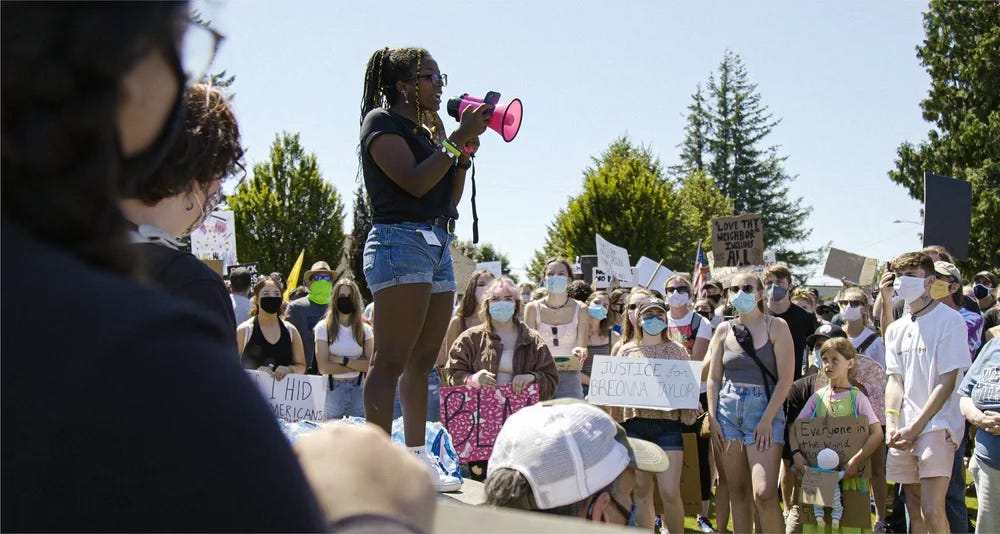
In the summer of 2020, in the wake of George Floyd’s murder, 17-year-old Amsa Burke organized a Black Lives Matter protest in her hometown of Lynden, Washington. Amsa is Black; she was adopted from her home country of Ethiopia by a white family. Townspeople turned out to protest in solidarity with her. Counterprotestors lined the streets along the protest route, shouting slogans of their own. We lived in this familiar territory only five years ago, and Ari Aster attempted to reckon with it this summer in Eddington. The documentary Lynden brings a clarity to the summer of protests by focusing on a single town from a religious angle. Lynden (the town) is overwhelmingly white and Christian.
Co-directors Bryan Tucker and Chris Baron focus their cameras on the protests and let the signs do the talking. On the side of the Black Lives Matter movement, there are signs calling for justice to roll down (Amos 5:24); on the side of the “All Lives Matter” counterprotest, signs declare, “God Bless America.” Footage taken by Wylin Tjoelker, one of the counterprotestors, features a running commentary by Tjoelker himself theorizing that BLM protestors have been deceived by their “liberal teachers,” as if the only legitimate view of the issue is his own feelings of grievance.
In the aftermath, Baron and Tucker listen in as Lynden’s citizens grapple with the divisions in their city, the hurt they feel when their calls for justice receive a push back instead of an open hand of reconciliation. Lynden is keenly conscious of how the Bible is used in conservative circles to shore up grievances and how it's used in liberal circles to defend a call for justice. Both ends of the spectrum reference the same text, but Lynden makes it clear they're not speaking the same language. The pastors who try to straddle a middle line end up saying things that aren't coherent at all. The right won't listen and won't admit fault; the center cannot hold. It’s a difficult historical document to grapple with, but if we don’t confront it, the divide will only get wider. —Sarah Welch-Larson
★★★☆
Lynden is available to rent now.
Such an interesting take. I understand and see all your qualms, but I found this film to be so effective but because it matched all my sensibilities.
As a cat-owning-baseball-loving-die-hard-Mets fan, Caught Stealing was made for me. Its flaws are apparent, but man, I had so much fun. Great write up though, regardless of differences!